Ocean Observation Network and Forecasting
PIB ·
Why in news
The article details the current status of India's Ocean Observation Network, including various components like buoys, moorings, and coastal systems, as part of a Parliament Question.
Exam relevance
GS3 · Science & Technology, Environment & Ecology, Disaster Management · Prelims · Mains
Key facts
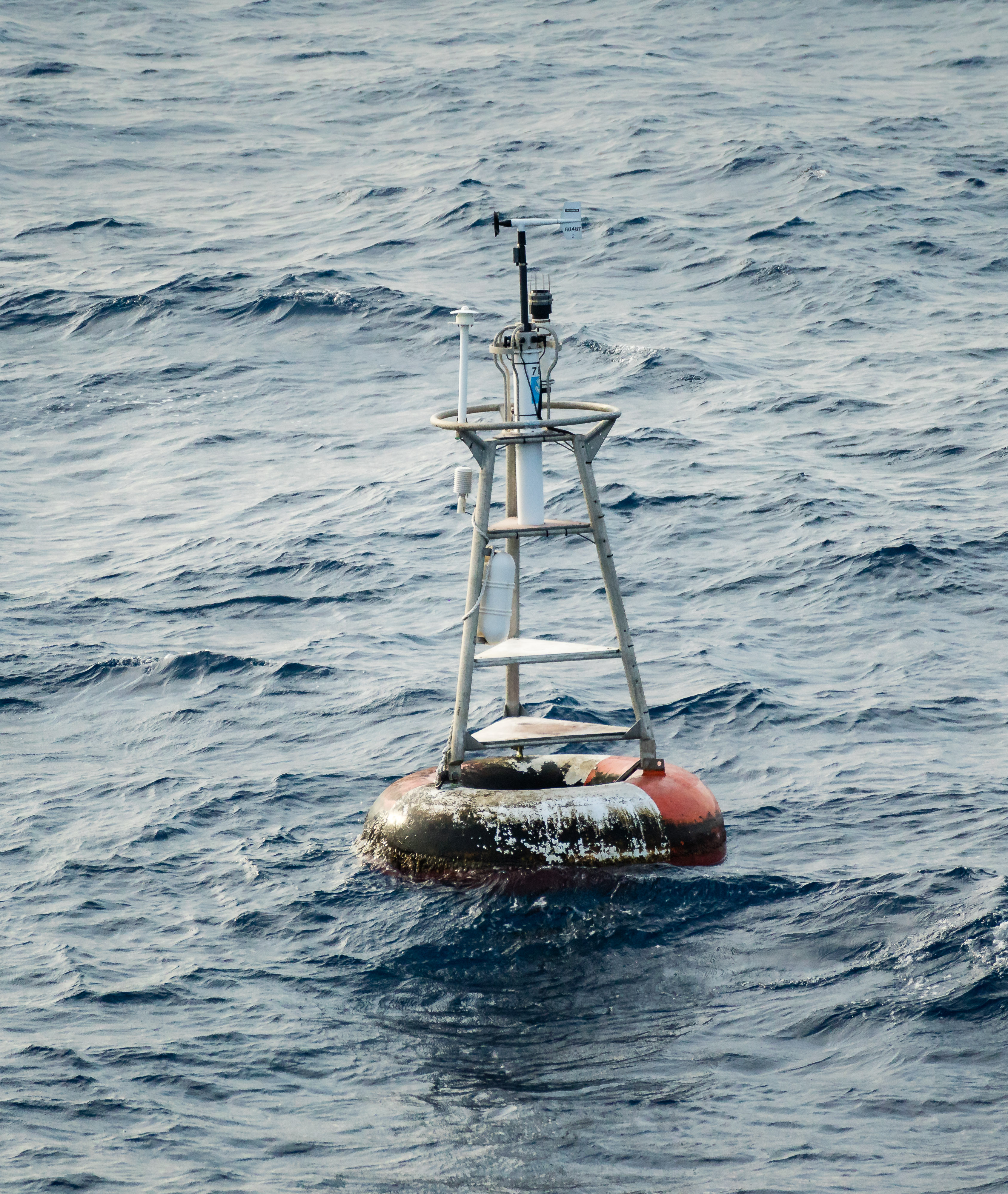
- India operates 19 subsurface ocean observation moorings for monitoring ocean currents and zooplankton biomass.
- The Indian Tsunami Early Warning System utilizes 17 broadband seismic stations, 7 deep-ocean tsunami buoys, and 36 coastal tide gauges.
- The tsunami monitoring network is augmented by 35 Global Navigation Satellite System (GNSS) receivers and strong-motion accelerometers.
- INCOIS operates a coastal observing network with 17 Directional Wave Rider Buoys, 20 Acoustic Doppler Current Profilers (ADCPs), and 32 Automatic Weather Stations (AWS).
- The coastal network also includes 2 Water Quality Buoys and 50 tide gauges.
- INCOIS has deployed 302 Argo profiling floats, 12 deep-sea glider missions, 45 drifting buoys, and 64 wave drifters for deep-sea and autonomous observations.
Prelims pointers
- The Indian Tsunami Early Warning System is supported by seismic stations, deep-ocean tsunami buoys, and coastal tide gauges.
- INCOIS operates coastal observing systems including Directional Wave Rider Buoys, ADCPs, and Automatic Weather Stations.
- Argo profiling floats are used for deep-sea and autonomous ocean observations.
Mains practice question
Discuss the significance of India's Ocean Observation Network in enhancing disaster preparedness and scientific research. What are the key components of this network and their respective roles?
Static linkage
The Ocean Observation Network is crucial for understanding oceanographic conditions, validating ocean models, and supporting early warning systems for natural disasters like tsunamis. This relates to India's capabilities in marine science, disaster management, and climate change research.
Significance
A robust ocean observation network is vital for India's maritime security, disaster preparedness, and scientific research. It aids in forecasting weather patterns, understanding climate change impacts, managing marine resources, and providing timely warnings for tsunamis and other ocean-related hazards. The data generated is essential for validating ocean models, improving prediction accuracy, and informing policy decisions related to coastal and marine environments.
Oceanography · Disaster Management · Tsunami Warning · INCOIS · Parliament Question · Science & Technology
Ocean Observation Network and Forecasting on project[UPSC]